
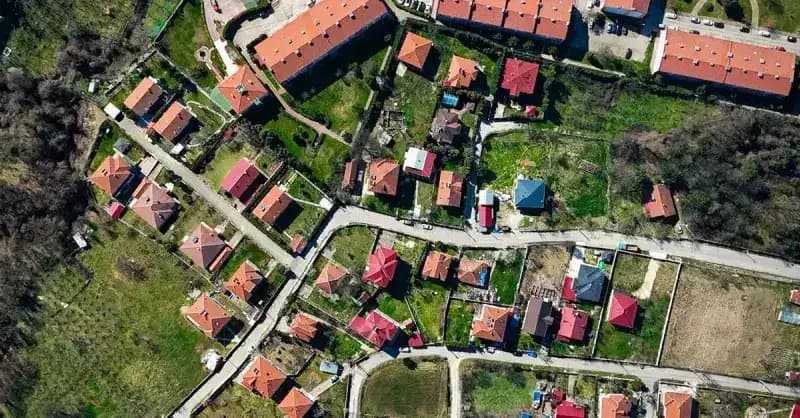
Allen's 1990s–2000s build-out filled Twin Creeks, Bethany Lakes, and the neighborhoods around Watters Creek with architectural shingles in big waves — and those waves are maturing together. A drive through Allen is a drive through roofs aged 15 to 30 years, the full span of shingle life.
That age spread is the local story: some Allen roofs are comfortably mid-life, others are at the decision point. Hail seasons sort them out — the same storm that bruises a 25-year-old roof barely marks a 10-year-old one next door. After a big storm, the inspection wave tells each homeowner where they stand.
Downtown Allen's older core is the exception: smaller, older homes with simpler roofs and older decking, where a replacement is straightforward and a repair goes a long way. The newer sections skew larger and more complex, with valleys and penetrations that make flashing quality the deciding factor.
Built out in essentially one long boom from the 1990s through the 2000s, Allen's roofs are remarkably same-aged — which means hail seasons here tend to push whole subdivisions toward replacement decisions at once. Twin Creeks and Bethany Lakes carry the 90s wave; the Watters Creek corridor and newer infill run a decade younger, but the storm track doesn't check build dates.
When roof trouble hits your Allen home — hail damage, a maturing 90s-era roof, or a leak that needs tracing — SummitCrest Roofing connects you with independent local roofing professionals. Tell us what is happening and we will match you with a pro nearby, fast.
- County
- Collin County
- ZIP codes
- 75002, 75013
- Service area
- Allen, Texas
Allen
Homes here, and the roofing problems they get
Local housing notes
- Twin Creeks and Bethany Lakes: 1990s–2000s subdivisions, roofs spanning mid-life to replacement age.
- Watters Creek area: mixed ages, many roofs at the decision point.
- Downtown Allen: older, smaller homes with simpler roofs.
- Newer infill: architectural shingles mostly still healthy.
- Subdivision uniformity makes material matching straightforward.
- Twin Creeks and Bethany Lakes: 1990s builds, the oldest large cohort, many approaching replacement. Watters Creek corridor: 2000s infill, mid-life roofs where inspections catch wear early.
Common local roofing issues
- Age spread: 15–30-year-old roofs across the same neighborhoods.
- Hail sorting: storms reveal which roofs are done and which have years left.
- Granule loss on 1990s-era shingles.
- Wind-lifted tabs on mid-life roofs.
- Complex rooflines on larger homes needing flashing attention.
Allen FAQs
An inspection answers it definitively — but as a rule of thumb, 1990s shingles are at or past typical lifespan, 2000s shingles are mid-to-late life, and 2010s shingles are mid-life. Hail history moves individual roofs off those averages.
For an isolated, fixable problem — yes, a good repair can buy real years. For widespread wear or recurring leaks, price the replacement alongside the repair; at 22, the math often favors replacing.