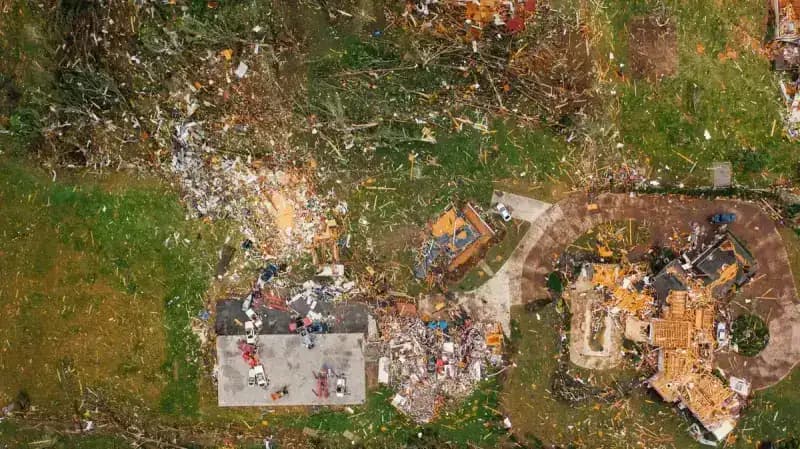
North Texas is hail country. A single spring storm can bruise hundreds of shingles — knocking off the protective granules that shield the asphalt underneath — without a single visible hole from the ground. Wind does its own damage: lifting shingle tabs, tearing ridge caps, and driving rain under flashing. The roof can look fine from the driveway and still be compromised.
After a storm, the order of operations matters. First, make sure everyone is safe and the home is secure — a tarp over an actively leaking section prevents the interior damage from compounding. Second, document everything: photos of the roof, the yard, and any interior stains, plus the date and time of the storm. Third, get a professional inspection — hail bruising and lifted shingles are easy to miss from the ground, and an experienced roofer knows what insurers look for.
SummitCrest Roofing is a free referral service — we don't do storm repair ourselves. Tell us what the storm did and we'll connect you with up to three independent local roofing professionals. SummitCrest Roofing connects you with an independent local roofing professional — you work directly with the roofer you choose.
Key facts
- Hail bruises shingles by fracturing the mat underneath and knocking off the protective granules — damage that is often invisible from the ground.
- Dents on soft metals (vents, gutters, flashing) signal that the shingles took the same hail hits.
- After a storm, the order is: make the home safe, document the storm's date and the damage with photos, then get a professional inspection.
- Inspection reports with dated photos are what insurers look for when assessing hail and wind claims.
- Granule piles in gutters and dark bruised spots in a random pattern are classic signs of hail damage.
- Policies vary — check your own for covered perils, deductibles (many Texas policies have separate wind/hail deductibles), and filing windows.
- Typical first step
- Document what you see from the ground — missing shingles, ceiling stains, granules in the gutters — then get a pro out before the next rain.
- Emergency capable
- Yes — call any time water is actively coming in or storm damage has opened the roof.
Warning signs
Signs you need this service
- Dents or dimples on shingles, vents, or gutters after a hailstorm.
- Granules washing off the roof and piling in gutters or at downspouts.
- Shingles cracked, torn, or missing after high winds.
- Ridge caps lifted or blown off.
- Water stains appearing on ceilings or walls in the days after a storm.
- Neighbors getting roof work done — hail hits whole neighborhoods, not single houses.
What happens
The process, step by step
Secure the home: tarps go over any active leaks to stop interior damage from spreading.
Document the damage: photos of the roof, damaged items in the yard, and interior stains — dated.
Professional inspection: the roofer walks the roof and documents hail hits, wind damage, and flashing issues.
Repair and restore: damaged sections are repaired or the roof is replaced if the damage is widespread — coordinated with your insurance claim if you file one.
Watch
See this work up close
Storm rain on a roof
Illustrative stock footage — not SummitCrest's own work.
Cost factors
What influences the cost
Every job is different, so we won't quote prices sight unseen. These are the factors a pro will weigh when pricing your job:
- Extent of the damage — a few slopes versus the entire roof.
- Whether decking or flashing also needs work beyond the shingles.
- Material matching for partial repairs versus full replacement.
- Emergency tarping and temporary protection if the roof is open to weather.
- Your insurance deductible and what the policy covers — check your own policy.
DIY guidance
What you can do — and when to stop
Safe to do yourself
- Photograph everything: roof, yard debris, gutters, and interior stains — with dates.
- Place buckets and move valuables away from active drips.
- Note the storm's date and time — insurers and roofers both ask.
- Keep receipts for any emergency tarping or temporary repairs.
Stop and call a pro
- Climbing onto a storm-damaged roof — it may be structurally compromised and it's often still wet.
- Signing anything with a door-to-door 'storm chaser' before you've verified the company.
- Filing an insurance claim before you know the extent of the damage — get an inspection first.
- Waiting months to address hail damage — bruised shingles deteriorate faster once granules are gone.
Frequently asked questions
Look for dents on soft metal (vents, gutters, flashing) — if hail dented those, it hit the shingles too. On shingles, hail knocks off granules, leaving dark bruised spots that are hard to see from the ground. A professional inspection after a hailstorm is the reliable way to know.
Policies vary — check your own. In general, sudden storm damage like hail and wind is the kind of thing homeowners policies are designed for, while wear-and-tear is not. Get a professional inspection first so you know the extent of the damage before you call your insurer.
No. SummitCrest Roofing is a free referral service. We connect you with up to three independent local roofing professionals, and you work directly with the roofer you choose.
Document the date, photograph any visible damage from the ground, check inside for new stains, and schedule an inspection. If water is coming in, get a tarp over the leak and contain the interior damage — then call a roofer.
Storm-chasing contractors canvas hail-hit neighborhoods. Some are legitimate local companies; others disappear after the check clears. Verify any contractor independently — license, insurance, local references — before signing anything, and never pay in full upfront.
Hail leaves random, localized impact marks — bruised shingles with granules knocked off in scattered spots, often with dents on vents and flashing nearby. Normal wear is gradual and uniform: curling, cracking, and thinning across whole slopes. Insurers and inspectors look for that pattern difference when assessing a claim.
It depends on your policy — many allow a year or more from the storm date, but waiting has real downsides. Damage gets harder to attribute to a specific storm over time, and small leaks turn into big interior damage. File sooner rather than later, and document the storm date.
It can, if the damage is widespread enough that repairs won't restore the roof — your adjuster makes that call based on the inspection. Policies differ on whether they pay replacement cost or depreciated actual cash value, so read your own policy. A roofer's documented inspection strengthens your position.
Shingles tested to survive simulated hail impacts without cracking — typically Class 3 or 4 under the UL 2218 standard. They cost more than standard shingles but hold up better in hail country. Some insurers offer premium discounts for impact-rated roofs, so ask your insurer before you choose.
Get an inspection in late winter or early spring so you know the roof's baseline condition — pre-existing wear weakens any claim. Trim overhanging branches, secure loose items in the yard, and photograph the roof's condition. Know your insurance deductible and policy terms before the first storm hits.
Towns we serve in DFW
Storm & Hail by city
- Allen, TX
- Dallas, TX
- Frisco, TX
- Irving, TX
- Plano, TX
- Arlington, TX
- Denton, TX
- Garland, TX
- Lewisville, TX
- Richardson, TX
- Carrollton, TX
- Flower Mound, TX
- Grand Prairie, TX
- Mckinney, TX
- Coppell, TX
- Fort Worth, TX
- Grapevine, TX
- Mesquite, TX
- The Colony, TX
- Keller, TX
- Southlake, TX
- Colleyville, TX
- Bedford, TX
- Euless, TX
- Hurst, TX
- North Richland Hills, TX
- Mansfield, TX
- Cedar Hill, TX
- Desoto, TX
- Rowlett, TX
- Rockwall, TX
- Addison, TX
- Wylie, TX