Every roof has a lifespan. Asphalt shingles typically last 15–30 years depending on the product, installation quality, and weather exposure — and North Texas weather is not gentle. Hail seasons, high winds, and months of extreme heat age a roof faster than the calendar alone suggests. At some point, patching stops being the smart money and a fresh start makes more sense.
A full replacement is not just new shingles. The old roofing comes off down to the deck, damaged decking gets replaced, and a complete system goes back on: underlayment, ice-and-water protection in vulnerable spots, new flashing around chimneys and vents, the shingles or metal panels themselves, and ridge ventilation. Done right, it is a reset — the roof, the flashing, and the details all start at zero together.
SummitCrest Roofing is a free referral service — we don't replace roofs ourselves. Tell us what your roof looks like and how old it is, and we'll connect you with up to three independent local roofing professionals. SummitCrest Roofing connects you with an independent local roofing professional — you work directly with the roofer you choose.
Key facts
- A roof replacement removes the old roofing down to the deck and installs a complete new roof system: underlayment, flashing, shingles or metal, and ventilation.
- It is the right call when the roof is past its material's typical lifespan or damage is widespread across multiple slopes.
- Architectural asphalt shingles in Texas typically last 15–30 years, depending on the product, installation quality, ventilation, and weather exposure.
- Damaged or soft decking is replaced during tear-off before the new system goes on.
- Many cities permit only one shingle overlay, and most roofers recommend a full tear-off so the deck can be inspected.
- Most single-family replacements take one to three days of on-roof work, depending on roof size, pitch, and weather.
- Typical first step
- Document what you see from the ground — missing shingles, ceiling stains, granules in the gutters — then get a pro out before the next rain.
- Emergency capable
- For active emergencies, call and we'll route you immediately.
Warning signs
Signs you need this service
- The roof is 20+ years old and showing widespread wear — curling, cracking, or bald shingles across multiple slopes.
- Granules collecting in the gutters and at downspout outlets — the shingles are shedding their protective layer.
- Daylight visible through the roof boards when you're in the attic.
- Water stains on ceilings or walls that keep coming back after repairs.
- Sagging areas in the roof deck — a structural concern that needs prompt attention.
- A previous layer-over: the roof already has two layers of shingles and needs work again.
What happens
The process, step by step
Inspection and measurement: the roofer assesses the roof's condition, measures the slopes, and checks the deck, flashing, and ventilation.
Material and scope selection: you pick the roofing material and color; the roofer specifies underlayment, flashing, and ventilation details.
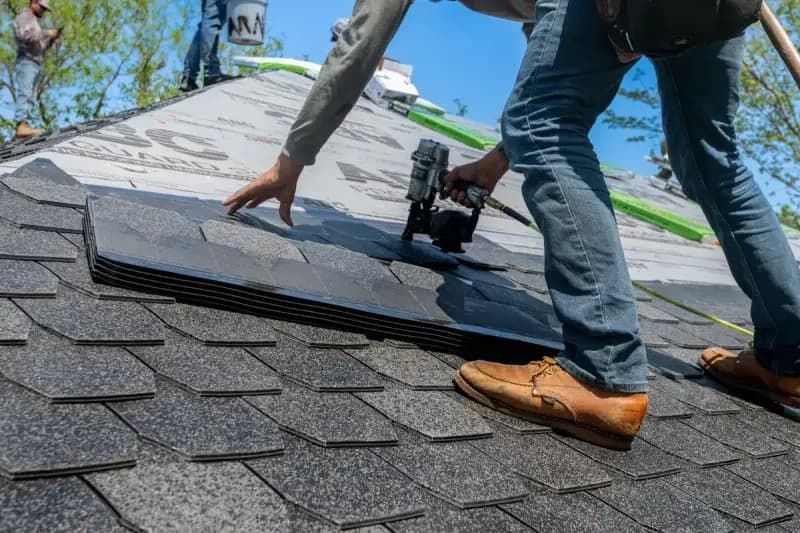
Tear-off: old roofing is removed down to the deck, damaged decking is replaced, and the surface is prepped.
Installation: underlayment, flashing, shingles or panels, ridge vents, and caps go on — then a final walkthrough and magnetic nail sweep of the yard.
Watch
See this work up close
Roof replacement in progress
Illustrative stock footage — not SummitCrest's own work.
Cost factors
What influences the cost
Every job is different, so we won't quote prices sight unseen. These are the factors a pro will weigh when pricing your job:
- Roof size and pitch — steeper, more complex roofs take more labor and material.
- Material choice — architectural shingles, designer shingles, and metal sit at different tiers.
- Tear-off layers — removing two old layers costs more than one, and damaged decking adds material and labor.
- Flashing, valleys, and penetrations — chimneys, skylights, and vents each need custom flashing work.
- Ventilation and code upgrades — ridge vents or decking improvements the local code requires.
DIY guidance
What you can do — and when to stop
Safe to do yourself
- Document the roof's condition: photos of worn areas, missing shingles, and interior water stains help any roofer quote accurately.
- Check the attic for daylight through the boards and note where stains appear after rain.
- Clear the driveway and move patio furniture before tear-off day so the crew has access.
- Ask your homeowners insurance about coverage for storm-related damage before you pay out of pocket.
Stop and call a pro
- Walking a steep or wet roof to 'take a look' — falls are the leading cause of roofing injuries.
- Tearing off roofing yourself without a plan for the exposed deck — one rainstorm ruins the interior.
- Layering new shingles over damaged decking or failed flashing — it hides the problem, not fixes it.
- Skipping the permit where your city requires one for a full replacement.
Frequently asked questions
Age plus spread. If the roof is past the typical lifespan for its material and wear shows across multiple slopes — not just one spot — replacement usually costs less over time than repeated repairs. A roofer's inspection gives you a straight answer for your specific roof.
Most single-family homes take one to three days of actual work, depending on size, pitch, and weather. Tear-off and decking repairs can add time. Your roofer should give you a schedule before work starts.
Sometimes, but it is not always allowed — many cities permit only one overlay, and some not at all. A second layer also hides decking problems and adds weight. Most roofers recommend a full tear-off so the deck can be inspected.
No. SummitCrest Roofing is a free referral service. We connect you with up to three independent local roofing professionals, and you work directly with the roofer you choose.
It depends on your policy and the cause. Sudden storm damage — hail, wind — is often covered, while age and wear-and-tear are not. Check your own policy and talk to your insurer before assuming either way.
Clear the driveway and move patio furniture, grills, and vehicles so the crew has access and falling debris can't damage anything. Inside, take pictures and fragile items off walls — tear-off vibration travels. Cover attic-stored items with tarps, since dust and small debris fall through the deck boards.
Compare what's actually different: shingle weight, wind rating, algae resistance, and warranty terms — not just the brand name. Most differences between mid-tier lines are modest; installation quality and flashing details matter more. Ask each roofer which line they install most — familiarity shows in the details.
In most DFW jobs the old roofing goes to a landfill — asphalt shingle recycling exists but is not widely available for residential tear-offs in North Texas. Decking lumber can sometimes be salvaged. If recycling matters to you, ask the roofer what their hauler does with the waste before you sign.
Two separate ones: the manufacturer's warranty on materials and the roofer's workmanship warranty on installation. Manufacturer coverage varies widely and usually prorates over time; workmanship warranties are typically much shorter. Get both in writing — and know which company actually honors each one — before work starts.
Yes — roofers in DFW work year-round, since Texas winters are mild. Shingles need enough warmth for the seal strips to bond, so installers time that carefully on cold days. Storm season can mean busier schedules and weather delays; booking outside the spring hail rush often gets you faster scheduling.
Towns we serve in DFW
Replacement by city
- Allen, TX
- Dallas, TX
- Frisco, TX
- Irving, TX
- Plano, TX
- Arlington, TX
- Denton, TX
- Garland, TX
- Lewisville, TX
- Richardson, TX
- Carrollton, TX
- Flower Mound, TX
- Grand Prairie, TX
- Mckinney, TX
- Coppell, TX
- Fort Worth, TX
- Grapevine, TX
- Mesquite, TX
- The Colony, TX
- Keller, TX
- Southlake, TX
- Colleyville, TX
- Bedford, TX
- Euless, TX
- Hurst, TX
- North Richland Hills, TX
- Mansfield, TX
- Cedar Hill, TX
- Desoto, TX
- Rowlett, TX
- Rockwall, TX
- Addison, TX
- Wylie, TX