
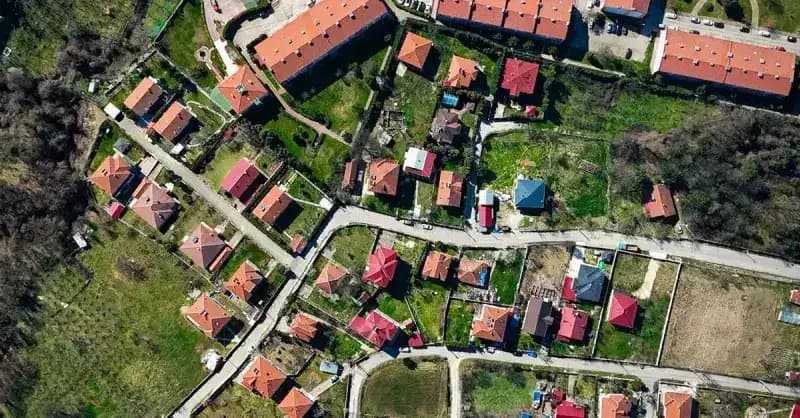
Arlington's 1960s–1990s subdivisions sit on flat terrain with whole blocks of homes built in the same boom years — and roofed in the same boom years. When one 1990s roof on a Sublett Road block starts curling, the neighbors' roofs are close behind. Age arrives in waves here.
Flat terrain means storms roll through unimpeded, and Arlington takes the full spring menu: hail, straight-line winds, and the occasional tornado-spawned damage swath. The hailstorms are the roof story — brittle aging shingles across whole subdivisions, all vulnerable at once.
The other local pattern is heat. Arlington's roofs bake through months of 100-degree days, and the subdivision-era builder-grade shingles weren't premium products to begin with. Granule loss, curling, and dried-out sealant are the slow-motion failures that hail then finishes.
Anchored by the stadiums and Six Flags, Arlington's residential streets are 1960s–1990s subdivisions on famously flat ground — which means hailstorms sweep across whole neighborhoods with no terrain to break them up. The city's sheer size means a single spring storm can damage thousands of same-era roofs in one afternoon, and the damage reports come in by subdivision.
When roof trouble hits your Arlington home — a wave-aged roof, hail bruising, or wind damage — SummitCrest Roofing connects you with independent local roofing professionals. Tell us what is happening and we will match you with a pro nearby, fast.
- County
- Tarrant County
- ZIP codes
- 76010, 76012, 76013, 76014
- Service area
- Arlington, Texas
Arlington
Homes here, and the roofing problems they get
Local housing notes
- 1960s–1990s subdivisions: whole blocks of same-era roofs aging together.
- East Arlington older stock: smaller homes, simpler roofs, older decking.
- Entertainment District edge: commercial-style flat roofs on mixed-use buildings.
- Dalworthington Gardens edge: larger lots, mature trees, branch and debris pressure.
- Builder-grade shingles dominate — mid-life roofs need honest assessment.
- 1960s–1990s subdivisions: the core stock, flat terrain exposing every roof equally to hail swaths. Areas near the entertainment district: older rentals and mid-century homes with deferred maintenance common.
Common local roofing issues
- Wave aging: entire subdivisions hitting replacement age simultaneously.
- Hail on brittle subdivision-era shingles.
- Heat degradation: granule loss and curling through long summers.
- Wind-lifted tabs and ridge caps in spring storms.
- Flat roof sections on commercial-style buildings near the Entertainment District.
Common calls in Arlington
Arlington FAQs
Quite possibly — 1990s builder-grade shingles are now at or past their typical lifespan. If neighbors are replacing, get an inspection. The wave pattern means your roof's age is no secret.
Yes. Hail bruising destroys the shingle's protective granule layer and fractures the mat underneath without causing immediate leaks. The roof then ages rapidly — that's why insurers cover hail damage even on non-leaking roofs.