
Short answer
Hail bruises shingles by knocking off protective granules and fracturing the mat underneath — damage that's hard to see from the ground. Check soft metals like vents and gutters for dents, look for granule piles at downspouts, and get a professional inspection after any significant hailstorm.
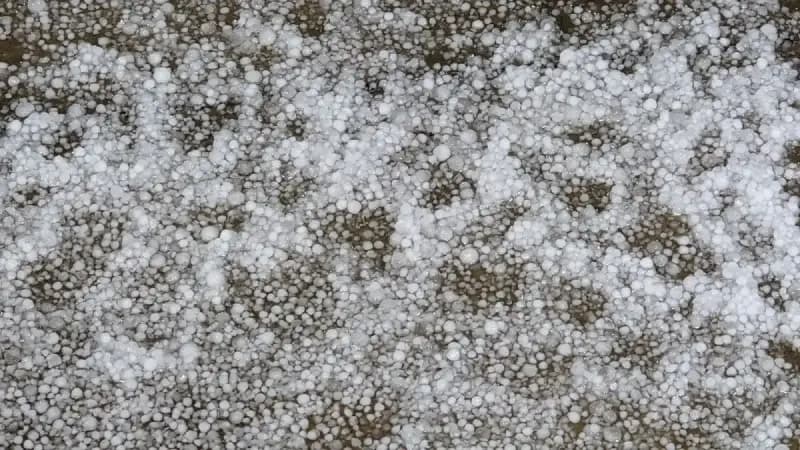
Why hail damage hides
Hail rarely punches clean holes in shingles. Instead, the impacts bruise the shingle — fracturing the fiberglass mat underneath and knocking off the ceramic granules that protect the asphalt from UV. From the ground, a hail-damaged roof often looks completely normal.
The damage shows up over time: UV attacks the exposed asphalt, the bruised spots deteriorate faster, and the roof ages years in months. That delayed failure is why post-storm inspections matter — catching hail damage early is the difference between a timely insurance claim and a worn-out roof nobody will cover.
What you can check yourself
Start with the soft metals: range-hood vents, turbine vents, gutters, downspouts, and flashing. Hail dents these visibly, and if the storm dented metal, it hit the shingles with the same force. Dented metal is your clue that the roof needs a closer look.
From the ground with binoculars, look for dark spots where granules are missing, shingles that look 'bruised' in a random pattern (unlike wear, hail hits randomly), and granule piles in gutters or at downspout outlets after the storm. Check inside too — new ceiling stains in the days after a storm mean water found a path.
- Dents on vents, gutters, flashing, or AC condenser fins.
- Dark bruised spots or missing granules in a random pattern.
- Granule piles in gutters and at downspout outlets.
- New water stains on ceilings or in the attic after the storm.
- Neighbors getting roof inspections — hail hits neighborhoods, not houses.
What a professional inspection finds
A roofer walks the roof and documents hail hits per slope — counting bruises, checking for fractured mats (felt by hand), and photographing everything. Insurers look for a minimum density of hits per area, so the documentation method matters as much as the finding.
The inspection also separates hail damage from pre-existing wear — blistering, old age, and installation issues look different from fresh hail bruising to a trained eye. That distinction decides whether an insurance claim is appropriate.
After the inspection: next steps
If the damage is significant, you have a decision: file an insurance claim or pay out of pocket. Get the inspection report first, understand your deductible and policy terms, and then decide. There is usually a filing window after a storm — check your policy — so don't sit on confirmed damage for months.
If the damage is minor or cosmetic, the roofer may recommend monitoring rather than claiming. Filing small claims can affect premiums; a pro can help you think through the tradeoff honestly.
Frequently asked questions
Within days to a couple of weeks. Fresh hail bruising is easiest to document accurately, and insurance policies have finite filing windows after a storm. Don't wait months — bruised shingles keep deteriorating once the granules are gone, and delayed claims are harder to prove.
Yes — that's the nature of hail bruising. The damage is in the shingle mat and the missing granules, which you genuinely can't see from the driveway. Check the soft metals: if vents, gutters, or flashing got dented, the shingles took the same hits and the roof deserves a professional look.
Pea-sized hail rarely damages asphalt shingles, though it can dent soft metal vents and gutters. Golf-ball-sized hail and larger is where real shingle bruising becomes likely. When you're unsure after a storm, a professional inspection costs little and settles the question definitively.
Hail is typically a covered peril under standard homeowners policies — but policies vary, deductibles apply, and many Texas policies carry a separate wind/hail deductible that's higher than the standard one. Check your own policy first, and get a professional inspection before you file.