
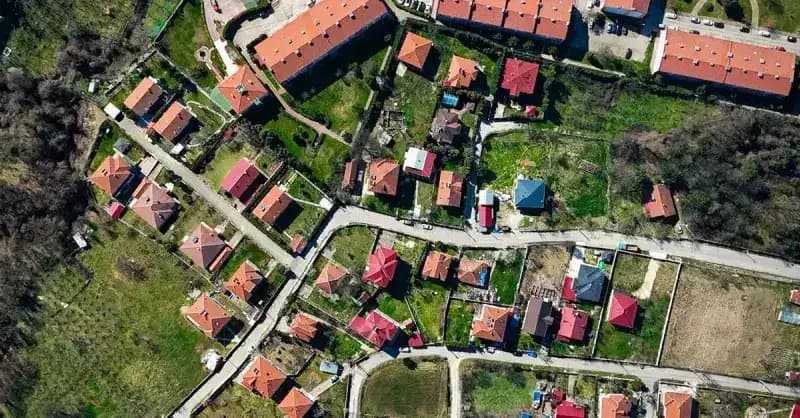
North Richland Hills is a city of three eras stacked on top of each other. The historic Smithfield community in the south holds 1960s–1970s ranch homes under mature oaks. The Iron Horse area — wrapped around the Iron Horse Golf Course with its tree-lined fairways — carries the 1980s–1990s wave. And the North Tarrant corridor, along North Tarrant Parkway toward Keller, is still adding 2000s–2010s two-stories. With Birdville ISD schools, NRH2O Family Water Park, and the I-820 commercial belt, NRH functions as the Mid-Cities' northern anchor.
That stacked history is a roofer's map. Smithfield's older ranches are on second or third roofs now, many with the flashing and decking quirks of piecemeal past work. Iron Horse's 90s wave is squarely in the decision window — old enough for real wear, young enough that owners debate repair versus replacement. The North Tarrant builds are mostly healthy but not storm-proof: builder-grade shingles from the 2000s are now old enough that hail bruising stops being cosmetic. Different eras, different conversations, often on the same block.
NRH's local roofing texture comes from its landscape. The city sits on the expansive clay soils that define north Tarrant County — soils that swell and shrink with the seasons, subtly working frames and rooflines over decades. The spring oak pollen season coats roofs and gutters in yellow-green film, a minor but real maintenance load. The Tarrant County hail track crosses here regularly, and the Iron Horse fairways' open corridors let wind move freely across exposed western slopes.
Whatever era your NRH home belongs to — a Smithfield ranch with a patchwork roof history, an Iron Horse two-story hitting twenty, or a North Tarrant build taking its first big hail — start with an inspection from someone who reads Tarrant County roofs daily. SummitCrest Roofing connects you with independent local roofing professionals; tell us the era and the symptoms, and we'll match you with pros who know which is which. The work is theirs, never ours.
- County
- Tarrant County
- ZIP codes
- 76180, 76182
- Service area
- North Richland Hills, Texas
North Richland Hills
Homes here, and the roofing problems they get
Local housing notes
- Smithfield (south): 1960s–1970s ranch homes, many on second or third roofs.
- Iron Horse area: 1980s–1990s homes around the golf course, in the replacement decision window.
- North Tarrant corridor: 2000s–2010s two-stories, mostly healthy but hail-exposed.
- Townhome and condo pockets near Iron Horse Blvd and the I-820 belt.
- Mature oak canopy across the south and center; newer, sparser planting in the north.
Common local roofing issues
- Three-era age spread: piecemeal past work on Smithfield ranches, decision-window 90s roofs, aging 2000s builder shingles.
- Expansive clay soils working frames and rooflines over seasonal cycles.
- Spring oak pollen coating roofs, gutters, and attic vents.
- Hail exposure along the Tarrant County storm track.
- Wind exposure on western slopes near the golf course's open fairways.
Common calls in North Richland Hills
- Roof Replacement in North Richland Hills
- Roof Inspection & Maintenance in North Richland Hills
- Storm & Hail Damage Repair in North Richland Hills
- Roof Repair in North Richland Hills
- Metal Roofing Installation in North Richland Hills
- Shingle Roofing in North Richland Hills
- Flat & Low-Slope Roofing in North Richland Hills
- Gutter Installation & Repair in North Richland Hills
North Richland Hills FAQs
It's the classic decision-window question. A 1995 roof in DFW is late-life for shingles. Repair makes sense for isolated, fixable damage on an otherwise sound roof; widespread granule loss or curling tips the math toward replacement. An inspection with photos tells you which you're looking at.
Indirectly. Expansive clay swells and shrinks seasonally, which works the whole frame over decades — you may notice it as sticking doors or hairline drywall cracks first. On the roof it shows as stressed flashing and shifting ridge lines. Mention foundation or soil concerns to your inspector; it's useful context.
SummitCrest Roofing connects you with up to three independent local roofing professionals. It performs no roofing work itself. You choose the pro and the project; SummitCrest only makes the introduction.