
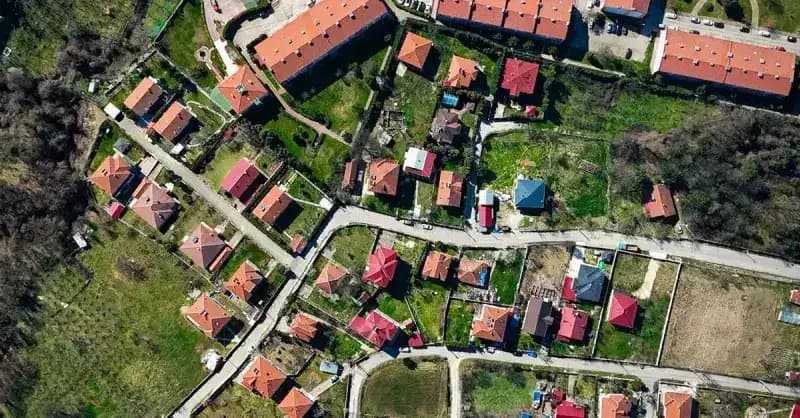
Coppell is the affluent small suburb between Dallas and DFW Airport — Old Town's historic homes, Riverchase's 1980s–90s subdivisions, and the Cypress Waters edge's newer development. Roof ages span from historic to brand new.
The 1980s–90s subdivisions are the main roof story: quality-built homes whose original or second roofs are now in the decision window. These are larger homes with complex rooflines, where the replacement is a significant project and the flashing details deserve a careful contractor.
Proximity to the airport doesn't affect roofs, but the Denton Creek corridor's tree canopy does — branches and debris are the local maintenance factor. And like everywhere in the metro, spring hail is the recurring exam every roof has to pass.
Coppell's schools made it a destination suburb, and its 1980s–2000s homes reflect steady, planned growth — brick exteriors, HOA oversight, and roofs installed to a higher standard than the metro's builder-grade baseline. Proximity to DFW Airport means jet noise, not roof damage, but the same spring hail track crosses here, and even well-built roofs bruise.
When roof trouble hits your Coppell home — a decision-window subdivision roof, hail damage, or a complex roofline needing careful work — SummitCrest Roofing connects you with independent local roofing professionals. Tell us what is happening and we will match you with a pro nearby, fast.
- County
- Dallas County
- ZIP codes
- 75019
- Service area
- Coppell, Texas
Coppell
Homes here, and the roofing problems they get
Local housing notes
- Riverchase and 1980s–90s subdivisions: larger homes, roofs in the decision window.
- Old Town Coppell: historic homes with character-sensitive roofing.
- Cypress Waters edge: newer development, younger roofs.
- Denton Creek corridor: tree canopy pressure on roofs and gutters.
- Complex rooflines common — flashing quality decides performance.
- 1980s–2000s planned subdivisions: above-average original roof quality, now entering the inspection window as the oldest cohorts age. HOA communities: architectural standards typically apply to replacement materials and colors — check before you commit.
Common local roofing issues
- Decision-window roofs on 1980s–90s subdivisions.
- Hail on the metro-wide spring storm track.
- Complex rooflines needing detailed flashing and valley work.
- Tree debris along the Denton Creek corridor.
- Historic Old Town roofs needing sensitive treatment.
Coppell FAQs
Valleys and wall intersections — that's where water concentrates and where flashing quality matters most. On complex roofs, the installer's flashing skill matters more than the shingle brand. Ask specifically about valley and flashing details when comparing quotes.
If you still have three-tab shingles, yes — they're a previous generation. Modern architectural shingles last longer, look better, and handle wind better. Almost every replacement today uses architectural shingles as the baseline.